Rock Wool Substrates for Hydroponic Strawberry Cultivation in Greenhouses and Vertical Farms Views: 314
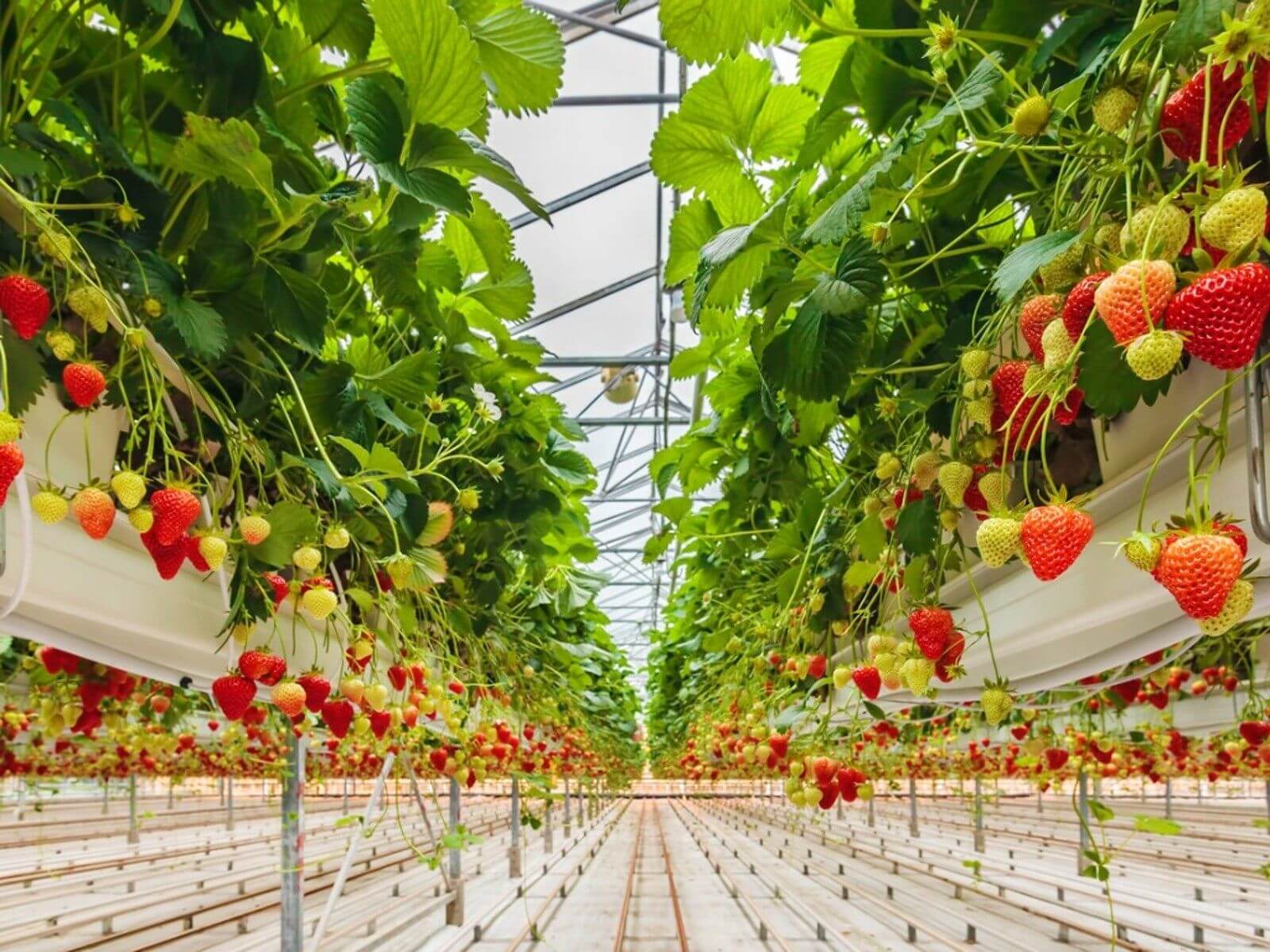
Growers achieve consistent, high-quality strawberry production in controlled environments by combining day-neutral cultivars with reliable soilless substrates. In modern greenhouses and vertical farms, rock wool substrates have become a preferred medium for strawberries due to their stability, uniformity, and precise control over water and nutrients. These advantages support predictable yields and year-round production, meeting the increasing demand for premium strawberries.
Market Context and Industry Growth
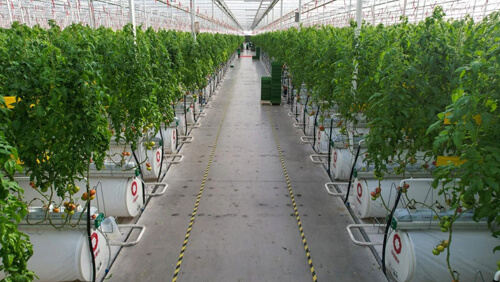
Controlled-environment agriculture (CEA), including greenhouse and vertical farming systems, is expanding rapidly as growers seek higher productivity, food safety, and supply stability. Within this sector, hydroponic strawberry cultivation is recognized as a fast-growing niche driven by urban farming, premium fruit demand, and advances in climate control.
Industry analyses consistently indicate double-digit annual growth for hydroponic and soilless cultivation segments related to berries and high-value crops. While exact market size estimates vary depending on regional scope and crop definitions, the overall trend clearly points to sustained expansion throughout the coming decade.
Key Practice: Preparing Rock Wool Substrates
Successful hydroponic strawberry production depends on careful preparation of the rock wool substrate. Professional growers condition rock wool before planting to create a stable and root-friendly environment from day one.
Recommended preparation steps include: - Pre-soaking rock wool in pH-adjusted water (target pH 5.5–6.0). - Allowing the substrate to fully saturate and drain naturally. - Avoiding compression or squeezing, which can damage internal air pore structure.
These steps help ensure balanced water retention and oxygen availability—two critical factors for healthy strawberry root development.
Why Choose Rock Wool for Hydroponic Strawberries?
Superior Water Retention and Aeration
Horticultural-grade rock wool is engineered to hold moisture while maintaining consistent air-filled pore space. Even after saturation and drainage, rock wool retains sufficient oxygen at the root zone, supporting vigorous root respiration and reducing stress under intensive production cycles.
This balance is particularly valuable for strawberries, which are sensitive to both drought stress and waterlogging.
Sterile and Inert Growing Medium
Rock wool is manufactured under controlled conditions and arrives sterile and pathogen-free. Its inert nature means it does not decompose or introduce unwanted biological activity into the root zone. This clean starting point helps reduce the risk of common soil-borne diseases such as Pythium, Fusarium, and Rhizoctonia.
For growers aiming to minimize chemical inputs and follow integrated pest and disease management strategies, a sterile substrate provides a strong foundation.
Consistency for Commercial Operations
Uniform density and structure across slabs or cubes allow for predictable irrigation and nutrient strategies. Many commercial growers favor professionally produced rock wool substrates designed specifically for hydroponic systems, as consistency simplifies system management across large-scale facilities.
Rock Wool vs. Other Substrates for Strawberries
Selecting the right substrate is a strategic decision. Below is a comparison of commonly used soilless media for hydroponic strawberry cultivation:
Substrate | Water Retention | Aeration | Stability Over Time | Disease Risk | Management Complexity |
Rock Wool | High | High | Excellent (does not decompose) | Very Low (sterile) | Low–Moderate |
Coco Coir | Medium–High | Medium | Moderate (organic breakdown) | Low–Moderate | Moderate |
Peat-Based Mixes | High | Low–Medium | Limited | Moderate–High | High |
Perlite / Mixed Media | Low–Medium | High | Good | Low | Moderate |
Why many growers prefer rock wool: - Predictable physical properties across crop cycles - Precise control of water and nutrient delivery - Reduced variability compared with organic substrates
These factors make rock wool especially suitable for commercial greenhouses and vertical farms focused on consistency and scalability.
Designing Hydroponic Systems for Rock Wool
Drip Irrigation Systems
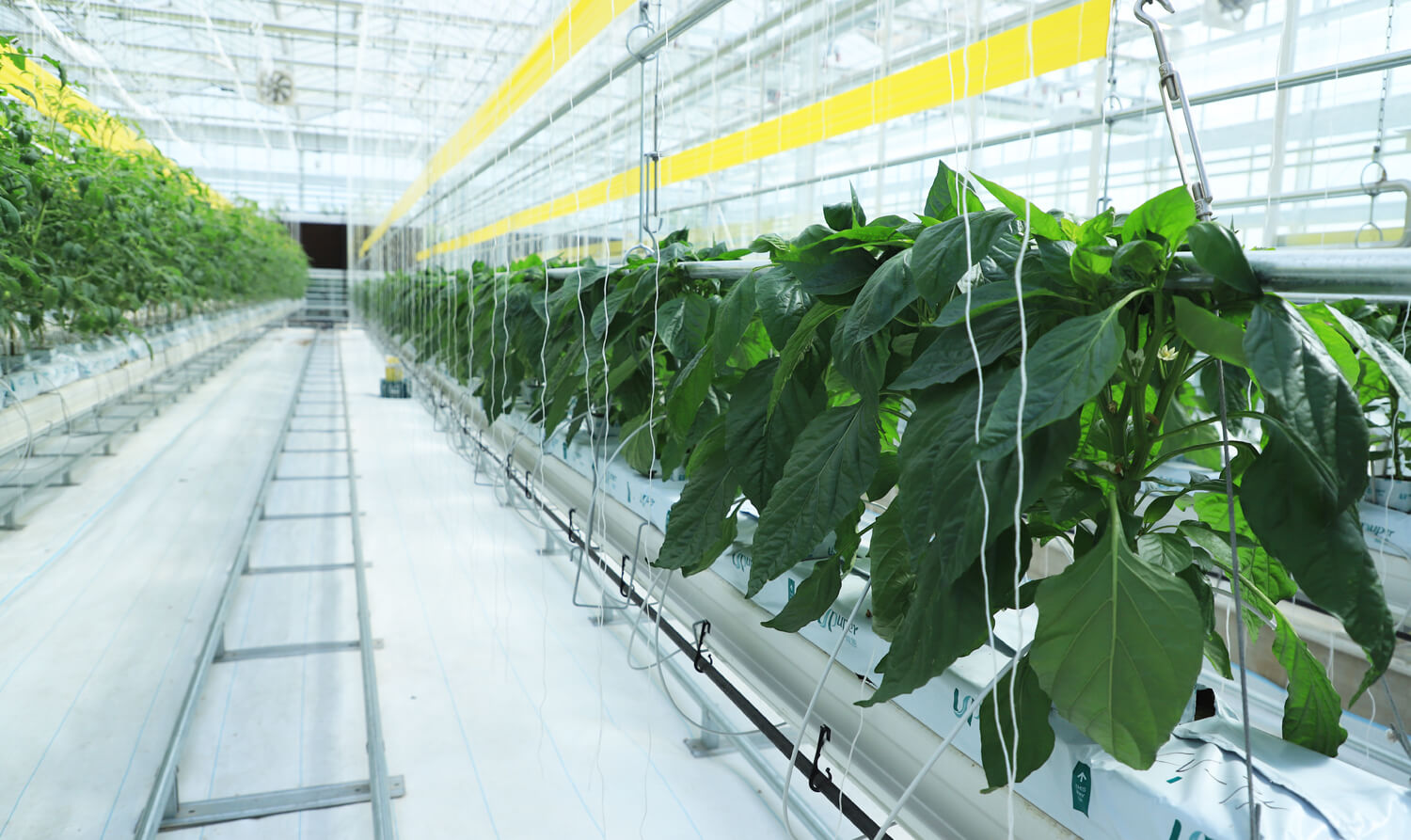
Drip irrigation delivers nutrient solution directly to each plant with high precision. When paired with rock wool slabs or cubes, drip systems allow growers to fine-tune irrigation frequency and volume based on plant demand, climate conditions, and light levels.
Typical emitter flow rates for rock wool-based strawberry systems range from 0.3 to 0.5 GPH, enabling controlled delivery without oversaturation.
Nutrient Film Technique (NFT)
NFT systems circulate a shallow stream of nutrient solution through channels containing rock wool cubes. Proper channel slope and uninterrupted flow are essential to avoid stagnation or root stress. NFT systems are often favored for compact installations and vertical farming layouts where efficiency and space utilization are priorities.
Nutrient and Environmental Management
Nutrient Solution Targets
Rock wool’s inert nature allows growers full control over nutrient formulation. Typical target ranges include:
Growth Stage | EC (mS/cm) | pH |
Vegetative | 1.4–1.8 | 5.5–6.0 |
Flowering | 1.8–2.0 | 5.5–6.0 |
Fruiting | 1.8–2.2 | 5.5–6.0 |
Daily monitoring ensures stable nutrient availability and prevents stress-related yield losses.
Light, Temperature, and Humidity
· DLI: 15–25 mol/m²/day supports strong growth and fruiting.
· Day temperature: 20–25°C (68–77°F).
· Night temperature: 10–12°C (50–54°F) for improved sugar accumulation.
· Relative humidity: 60–75% to balance transpiration and disease prevention.
Day-neutral cultivars such as Albion, Seascape, Monterey, and San Andreas adapt well to these controlled conditions.
Crop Care, Pest Management, and Harvest
Integrated Pest Management (IPM) programs emphasize prevention and biological controls, including beneficial insects and microbial solutions. Maintaining a clean root zone with sterile substrates reduces baseline disease pressure and supports sustainable production.
Strawberries are typically harvested at full color development to ensure optimal flavor, firmness, and shelf life. Rapid cooling and cold-chain management after harvest preserve fruit quality for market.
Key Takeaways
· Rock wool provides a stable, clean, and well-aerated root environment for hydroponic strawberries.
· Proper preparation and pH conditioning are essential for successful crop establishment.
· Compared with organic substrates, rock wool offers superior consistency and control.
· Controlled environments paired with professional-grade rock wool substrates enable reliable, year-round strawberry production.

Applications of UPuper Rock Wool in Commercial Strawberry Production
Professional growers select rock wool substrates in different formats to match their system design and production goals. In commercial operations, UPuper rock wool is commonly applied in the following ways:
· Rock Wool Slabs – Used in large-scale greenhouse production, slabs provide uniform water distribution and stable root zones for high-density strawberry planting.
· Rock Wool Cubes – Ideal for propagation and NFT systems, cubes support early root development and easy transplanting.
· Customized Density Solutions – Different fiber densities can be selected to balance water retention and aeration based on climate conditions, irrigation strategy, and cultivar requirements.
These application-oriented solutions allow growers to maintain consistency across crop cycles while adapting to diverse greenhouse and vertical farming environments.
Frequently Asked SEO Questions About Rock Wool and Strawberries
Is rock wool safe for growing strawberries?
Yes. Horticultural-grade rock wool is inert, sterile, and widely used for food crop production. When properly conditioned and managed, it does not introduce contaminants and allows precise nutrient control.
Does rock wool affect strawberry taste or quality?
Rock wool itself does not influence flavor. Taste and fruit quality are determined by nutrient balance, light levels, and environmental control. Rock wool supports consistency by providing a stable root environment.
Can rock wool be reused for strawberries?
Most commercial growers do not reuse rock wool substrates. Over time, salts can accumulate and pathogens may persist. Using fresh rock wool ensures a clean start for each crop cycle.
This article reflects best practices commonly adopted in commercial hydroponic strawberry systems and is intended for educational and informational purposes within controlled-environment agriculture.


 Return